Data For Science

Data For Science

Epidemiology

Meta-Population Models

Bruno Gonçalves's avatar
Bruno Gonçalves
Apr 13, 2024
∙ Paid

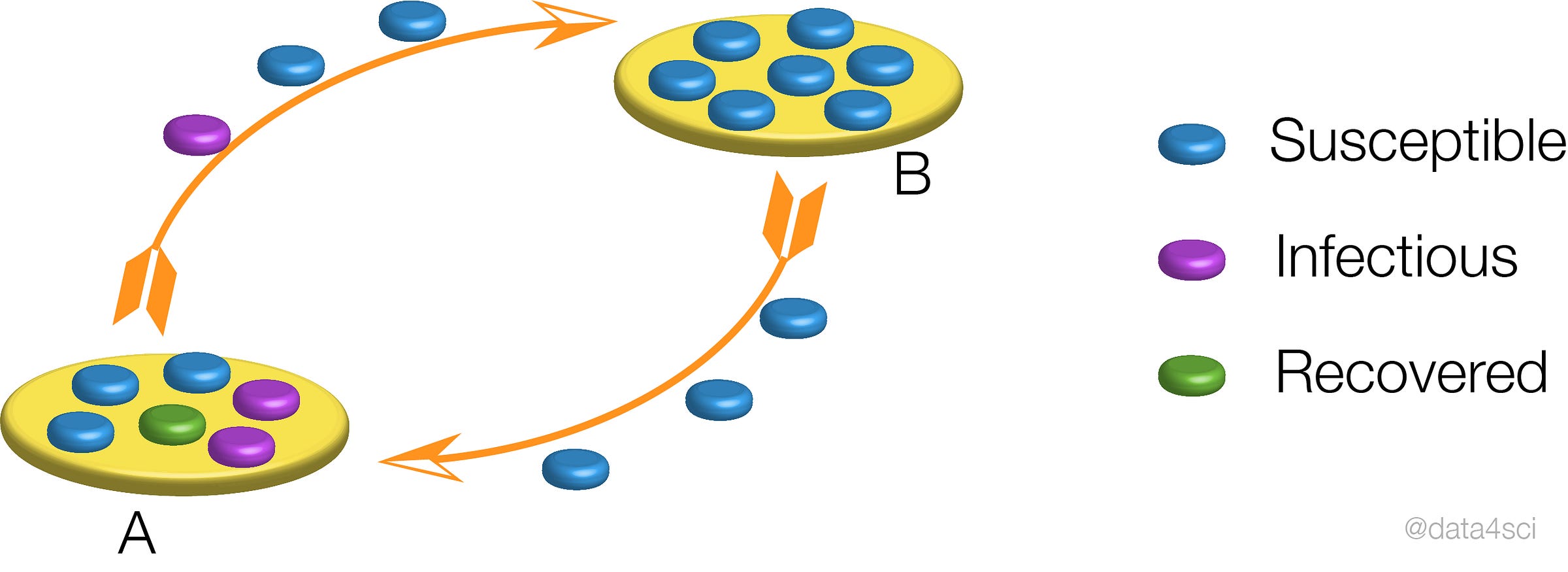
Welcome to the 10th post of the Epidemic Modeling series. In this post, we go beyond single populations and start modeling the spread of a disease through multiple coupled populations. Our fundamental assumptions are that the disease structure is the same everywhere and that individuals can travel between any two populations with a given fixed probability.

If you would like a quick refresher before we get started, check out our previous posts in this series (especially the first 2):

  1. Epidemic Modeling 101: Or why your CoVID19 exponential fits are wrong

  2. All CoVID-19 models are wrong, but some are useful

  3. Adding confidence intervals and stochastic effects to your CoVID-19 Models

  4. Impact of Seasonal effects on CoVID-19

  5. Competing CoVID-19 Strains

  6. Network Structure, Super-spreaders and Contact Tracing

  7. Network Models, the effect of degree correlations

  8. How to model the effects of vaccination

  9. The Impact of Age Structure on Epidemic Spreading

User's avatar

Continue reading this post for free, courtesy of Bruno Gonçalves.

Or purchase a paid subscription.
© 2026 Data For Science, Inc · Privacy ∙ Terms ∙ Collection notice
Start your SubstackGet the app
Substack is the home for great culture